
Steaks & Cuts
Thursday Tomahawk Nights at V's Paradise in Old Sacramento
2026-10-09
5 min read
Five o'clock on a Thursday, and the brass rail along the bar still holds the cool of the afternoon. Front Street outside carries the last of the tourists toward the river, cameras lowered, the day winding down into something slower. Inside, the kitchen doors swing open and closed in a rhythm that has nothing to do with rush and everything to do with care. Someone checks a thermometer. Someone else wipes down a cast iron pan that has already seen decades of service. This is the hour before Thursday becomes Thursday, before the room fills with the people who have made this night their own.
the cut itself
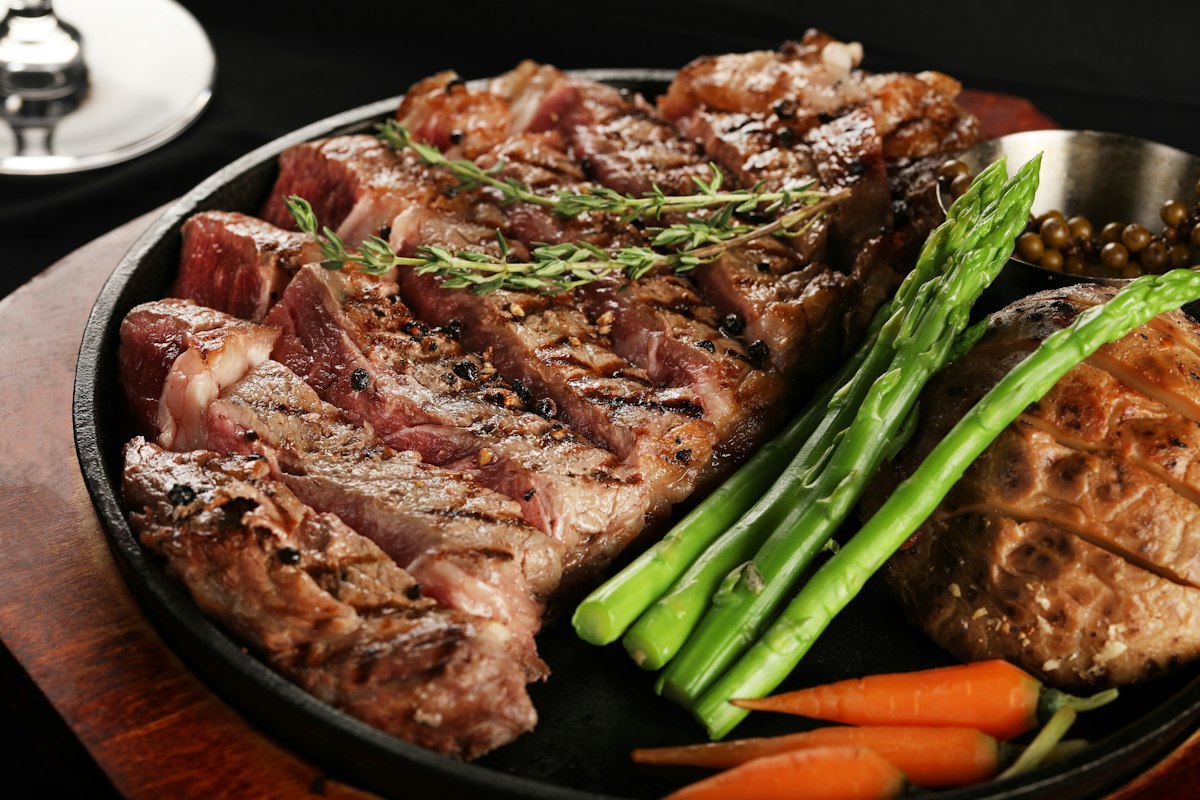
The tomahawk arrives at the pass looking like something out of another century, bone handle extending a foot past the eye of ribeye, the fat cap rendered gold at the edges. It has spent weeks in the dry age room upstairs, losing water, concentrating flavor, becoming something denser and darker than what walked through the door as a whole primal. This is not a steak that hides behind sauce. It does not need to. The char on the outside gives way to a center that stays rose from edge to edge, and the first cut releases a smell that reaches the next table before anyone there has even ordered.
What changes on Thursday is not the cut. It is the number beside it. The dry-aged tomahawk, the same one that headlines the menu every other night of the week, comes down to a price built for the neighborhood rather than the occasion. No one in this kitchen believes a steak like this should live behind glass, saved for anniversaries and expense accounts. The families who worked the rail yards and the river docks before this stretch of the city turned to brick and brass still live three miles from this room, and plenty of them are sitting in it tonight. Thursday is for them as much as anyone.
a neighborhood sits down to eat
By six thirty the dining room fills in a different way than Friday or Saturday ever will. There is less performance to it. A man in work boots sits across from his daughter, who drove in from Davis for the night. A table of four argues gently about whether the bone should go home in a bag or stay behind for the dog waiting in the car. The staff knows half the room by first name, not because the room is small, but because Thursday brings back the same faces, week after week, the way a good neighborhood bar does.
The obsidian walls hold the low light close, and the brass catches it in small flashes, on a knife, a watch, the rim of a glass. The room stays warm without trying, the kind of warm that comes from people who feel at ease rather than impressed. Conversation runs under the clatter of plates, unhurried. Near the back, a server sets a tomahawk down between two regulars who have clearly been coming here since before the renovation, and the smaller of the two claps once, quietly, the way people do when something they love shows up exactly as expected.
This is not a discount built to move inventory on a slow night. It is closer to an old promise, the kind a family restaurant makes and keeps because the family still eats in this city too. The tomahawk takes the same weeks in the dry age room whether it is Thursday or Saturday. The same hands season it, the same grill marks it, the same rest under foil before it reaches the table. The only thing that moves is what it costs to sit down and have it, and that movement is the whole point.
Outside, the gas lamps along Front Street flicker against the brick, and the river keeps doing what it has done for a hundred and seventy years, moving past the city without asking anything of it. Inside, forks work through bone-in ribeye, and the conversation slows the way it does when a table has finally gotten what it came for. Someone orders a second glass of something red and full-bodied, happy to stay a while longer. The night does not rush toward anything. It simply continues, plate after plate, table after table, until the last tomahawk of the evening leaves the kitchen and the whole room seems to exhale at once.
By nine, the crowd thins to the regulars who linger longest, the ones who remember when this stretch of the city smelled more of the delta than of brass polish. They finish slow, the bone picked clean, the plate nudged an inch toward the center of the table, a small gesture that needs no words. A server clears without hurry. Someone laughs near the bar, a short, easy laugh that belongs to a Thursday and nothing else.
The door opens once more before it finally closes, letting in a breath of cold river air, and then the room settles into itself again, the bone-in plate at table twelve still warm, waiting for someone to finish their story before they let it go.